What the application demands
| Requirement | What it means in the design |
|---|---|
| Hydrogen-side material compatibility | Hydrogen can embrittle high-strength steels. The hydrogen side normally uses a compatible austenitic stainless steel. |
| Sealing and leak rate | Hydrogen molecules are small and leak readily. Seal design and weld quality must be tighter than on general heat exchangers. |
| Wide temperature and pressure range | Hydrogen equipment spans ambient to high temperature and atmospheric to pressurized duty. |
| Marine requirements | Marine duty adds vibration, roll, salt spray corrosion and class society documentation. |
Our approach
We enter hydrogen projects through prototype development: first select the hydrogen-side material and sealing concept, then complete the structure, build and test. High-temperature exhaust-to-thermal-oil duty also requires control of flue-side fouling and thermal-oil film temperature.
- Hydrogen-side material selected for compatibility and hydrogen embrittlement resistance
- Seal and weld design set for a low leak rate
- Exhaust-to-oil duty designed around both fouling and oil film temperature
- Test articles and series units supplied to the project stage
Design highlights
- Austenitic stainless steel and other compatible materials used on the hydrogen side
- Sealing and welding details selected to control leakage risk
- Exhaust-side fouling and thermal-oil film temperature constrained together
- Multiple prototype iterations supported during development
Project status
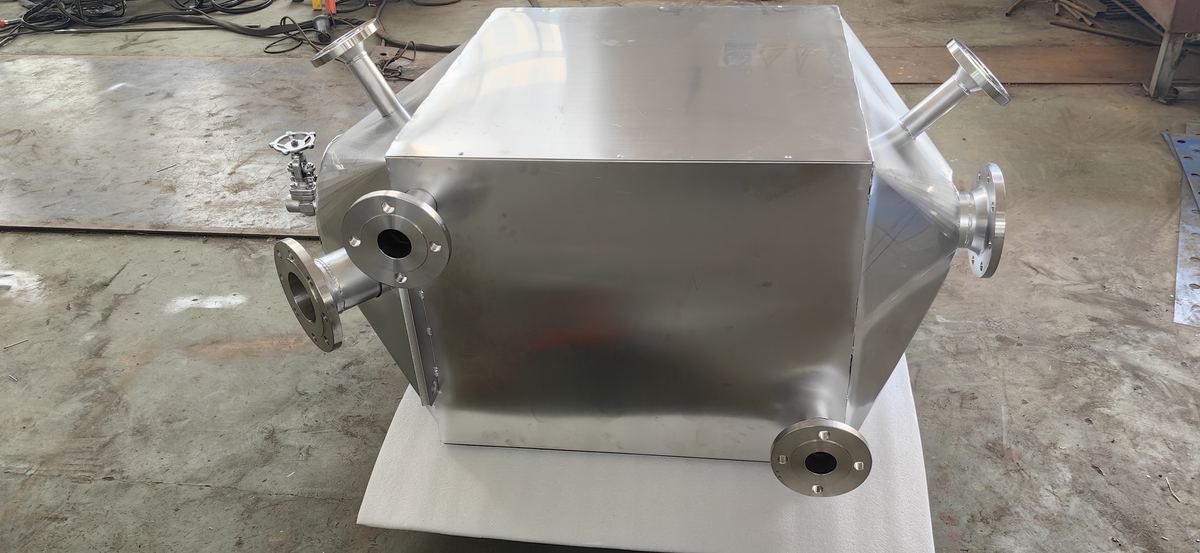
The vehicle hydrogen engine recuperator and hydrogen generator heat exchanger are developed. The marine hydrogen engine exhaust-to-thermal-oil heat exchanger is developed and in sea trials, with heat transfer targets met but not yet in series application.
Related products
Selected projects
Hydrogen engine recuperator for a vehicle powertrain, development completed.
Heat exchanger for a hydrogen generator, development completed.
Marine hydrogen engine exhaust-to-thermal-oil heat exchanger, developed and in sea trials with heat transfer targets met.